


Facial injuries
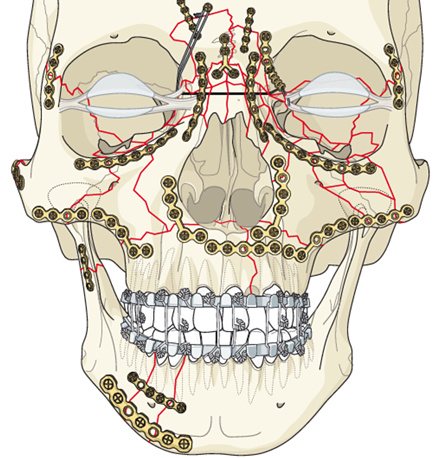
What are the most common facial injuries?
Usually, these are simple bruises (cuts) of the facial soft tissues, fractures or decapitation of teeth and simple fractures of the jaw bones. Most of them involve children and adolescents who get hurt during play or sports. Mild cases can be treated effectively and immediately in the doctor’s office, avoiding visiting the emergency rooms of large hospitals.
On the contrary, more serious facial injuries, fractures of the bones of the skull and jaws from traffic accidents, work accidents or personal and domestic violence, must be treated in a hospital by the oral and maxillofacial surgeon, in collaboration with other related specialties. In severe injuries, both vision, breathing and swallowing can be affected, which makes treatment urgent and specialised.
What is the role of the maxillofacial surgeon?
The oral and maxillofacial surgeon has the training and experience to effectively treat facial injuries related to fractures of the upper and lower jaw, eye sockets and cheekbones, as well as injuries to the mouth and teeth. The treatment of facial trauma showed a significant development after the Second World War due to the experience gained by American and European maxillofacial surgeons by treating war casualties. In fact, in the last 25 years, there has been even greater progress thanks to advances in technology and available materials.
It depends on each case. The procedure is no different from repairing a fracture in any other part of the body. However, due to the specific nature of the area, special treatment is required. Surgery is performed using the most modern techniques (cosmetic incisions) and materials (titanium plates and screws for the necessary immobilization) so that the patient can fully recover functionally and cosmetically and quickly return to their daily activities. The knowledge that the maxillofacial surgeon has about proper dental occlusion and chewing function is also a guarantee for the proper restoration of serious maxillofacial fractures. After recovery, which depends on the severity of the injury and the patient’s age, the maxillofacial surgeon will recommend a special rehabilitation program.
The information provided here is not intended as a substitute for professional medical advice, diagnosis, or treatment, but is provided for your general information only. If you have any problems or concerns, always contact your oral and maxillofacial surgeon.