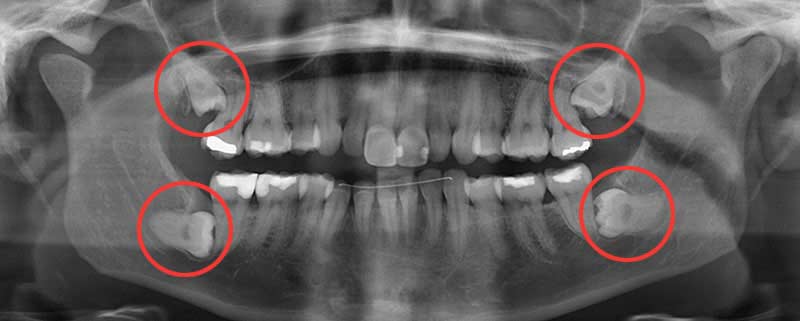
The third molars, commonly known as wisdom teeth, are the last teeth to emerge in the mouth, typically appearing between the ages of 17 and 23, marking the transition from puberty to adulthood. Due to their late eruption, they often lack sufficient space to emerge fully, leading to impaction or partial impaction.


Wisdom teeth
• What is an impacted tooth and what a partially-impacted tooth?
• Problems caused by impacted or partially impacted wisdom teeth?
• When should a wisdom tooth be extracted?
• Should asymptomatic wisdom teeth be extracted?
• Surgical Extraction of Wisdom Teeth
• Extraction of Multiple Wisdom Teeth
• Should wisdom teeth come out in children and adolescents after orthodontic treatment?
• Retaining Wisdom Teeth
What is an impacted tooth and what a partially-impacted tooth?
An impacted tooth is one that has not emerged in the mouth after the expected age, while a partially impacted tooth is partially visible. These teeth remain immobile and can cause problems if not removed.
The most common reason for impaction is a lack of space, though obstacles or injuries at a younger age can also be factors.
Wisdom teeth are the most frequently impacted, with nine out of ten people having at least one impacted or partially impacted wisdom tooth, followed by canines.
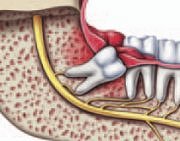
Problems caused by impacted or partially impacted wisdom teeth?
• Impacted wisdom teeth can contribute to overcrowding of the anterior teeth and recurrence of orthodontic issues.
• The area around a partially impacted wisdom tooth is difficult to clean, leading to bacterial proliferation and infections (pericoronitis), which can range from mild to severe and potentially disseminate to other organs. They tend to recur if the responsible wisdom tooth is not removed.
• Partially impacted wisdom teeth are prone to caries and periodontal issues.
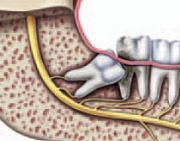
• Impacted wisdom teeth can damage the adjacent teeth by pressing or absorbing their root.
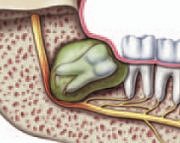
• Very rarely, a cyst or even a tumor can form around an impacted tooth. As the lesion grows, it leads to more serious problems by damaging adjacent teeth, nerves and other anatomical elements and by weakening the jawbone.
When should a wisdom tooth be extracted?
It goes without saying that wisdom teeth that either have a problem themselves or cause problems in adjacent teeth and jaws should be removed. More specifically, when:
• They present with any dental pathology (caries, periodontitis) themselves
• They have frequent recurrences of pericoronitis
• They cause damage to adjacent teeth
• They are responsible for the formation of cysts or very rarely tumors
Should asymptomatic wisdom teeth be extracted?
Wisdom teeth that have appeared in the mouth and work
Wisdom teeth that have fully emerged and are healthy do not need to be extracted but should be monitored regularly.
Wisdom teeth that are either partially impacted and /or non functional
It is completely understandable that most patients are reluctant to undergo a surgical procedure without having encountered any problem from their wisdom teeth. However absence of pain and discomfort today does not mean absence of problems from wisdom teeth in the future.
Both the American Association of Oral and Maxillofacial Surgeons and the British Association of Oral and Maxillofacial Surgeons, based on documented scientific research, recommend that all patients be examined at a young age by a specialized oral and maxillofacial surgeon. These specialists have the knowledge and experience to weigh the benefits of early extraction of wisdom teeth against the potential future problems and the burden of surgery on the patient.
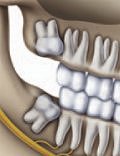
Surgical removal of wisdom teeth is easier in young patients with partially formed roots and softer bone. Many studies show that the removal of wisdom teeth with only one-third of the root (seeds) is associated with a lower percentage of postoperative complications, whose frequency increases, anyway, after the age of 25.
We therefore believe that early extraction is recommended, especially in young patients, as it is easier and associated with fewer complications.
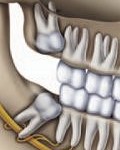
Surgical Extraction of Wisdom Teeth
The extraction of fully erupted wisdom teeth is analogous to any other tooth extraction and can be performed by a general dentist or a maxillofacial surgeon.
However, the surgical extraction of impacted teeth should be performed by a specialist oral and maxillofacial surgeon with the requisite training and experience to perform and complete such operation painlessly, quickly and with minimal postoperative complications.
First visit
During the initial consultation, the oral and maxillofacial surgeon will conduct a clinical examination and review radiographs, such as panoramic radiographs or Dental Scans, to assess the wisdom teeth. The surgeon will explain the necessity for extraction, the surgical procedure, and potential complications.
Surgery
Surgical extraction is a routine procedure for an experienced maxillofacial surgeon. Local anesthesia is typically administered, though sedation or general anesthesia may be necessary in complex cases.
Surgery is painless with minimal discomfort, usually lasting no more than 15 minutes.
Postoperative period – Suture removal
Postoperative symptoms such as swelling, discomfort, and hematoma present and increase for the first 48 hours but typically subside within 5-6 days. Adhering to the surgeon’s instructions and medication regimen is crucial for a smooth recovery. Severe postoperative pain is rare.
A follow-up visit, a week later, is necessary to confirm healing and remove sutures if needed.
Extraction of Multiple Wisdom Teeth
Although each wisdom tooth can be removed separately, it is much better for the patient to have them extracted either in pairs (each side separately) or all together. Although removing all wisdom teeth together initially sounds quite burdensome for the patient, his final discomfort is clearly reduced.
This approach minimizes the number of surgical sessions, medication courses, and disruptions to daily life.
Should wisdom teeth come out in children and adolescents after orthodontic treatment?
The presence of impacted wisdom teeth, according to the opinion of many experts, seems to be one of the factors that create overcrowding in the front teeth and recurrence of orthodontic issues Therefore most orthodontists recommend their extraction in adolescents after the end of orthodontic treatment and before the onset of their eruption
As already pointed out early extraction is easier and associated with fewer complications, especially in young patients.
The information provided here is not intended as a substitute for professional medical advice, diagnosis, or treatment, but is provided for your general information only. If you have any problems or concerns, always contact your oral and maxillofacial surgeon.